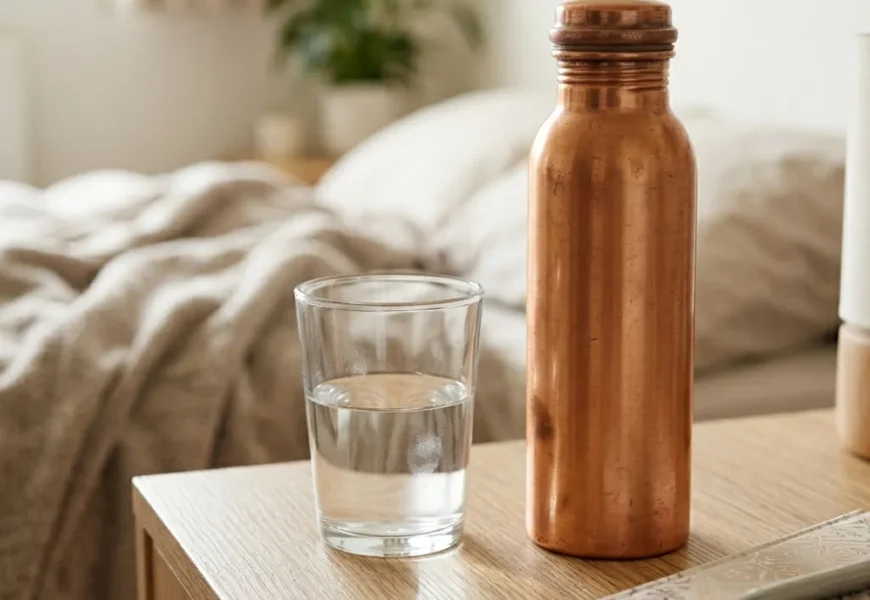
Have you ever looked at a beautiful, new copper bottle and thought, “This is it. I’m taking my health game to the next level”? I did. Growing up, I’d watch my grandparents use their copper vessels. It was a ritual. They’d fill a large copper ‘Kalash’ every night, and the first thing they drank in the morning was that water. They called it ‘Tamra Jal’, and they swore by it for their digestion and energy.
So, when I bought my first hammered copper bottle, I was excited. But I had a dilemma. It was a cold winter morning, and the thought of drinking cold or even room-temperature water first thing made me shudder. My usual routine was a warm mug of water with a dash of lime.
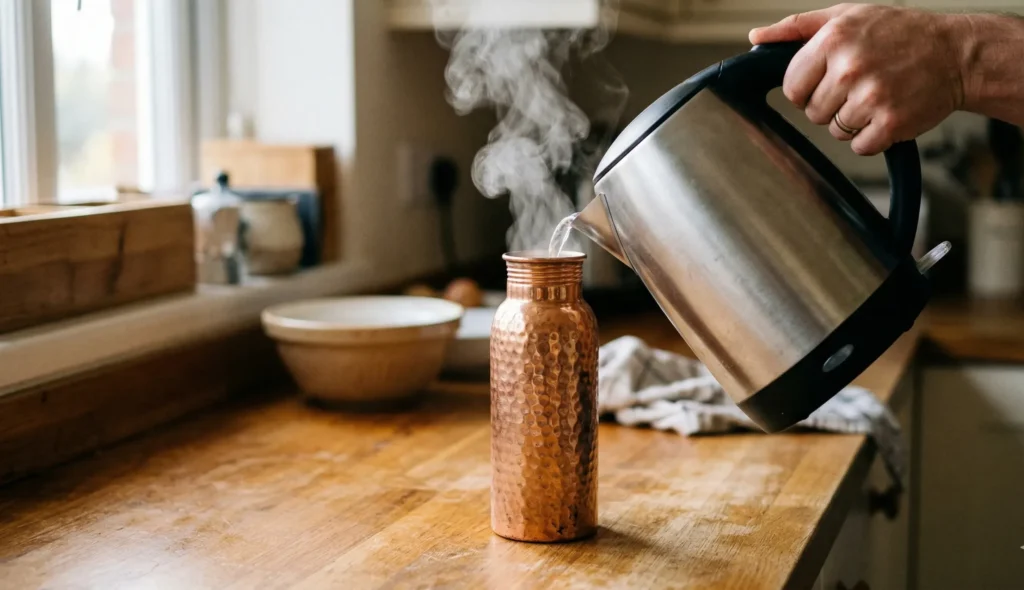
Naturally, I thought, “Why not combine the two? I’ll pour my warm water into the copper bottle!” It seemed like the perfect “health hack.”
I was wrong. And a few days into this experiment, I realized I was potentially doing more harm than good.
Here is the thing about copper that no glossy advertisement tells you, and why you should absolutely not use boiling or very hot water in your copper vessel.
The Silent Chemical Reaction: Heat Meets Reactive Metal
First, we need to understand why we use copper at all. Copper isn’t an inert metal like food-grade stainless steel or glass. It’s highly reactive. When you let water sit in a copper bottle for 6 to 8 hours, it naturally undergoes a process called the Oligodynamic Effect. In simple terms, tiny, tiny amounts of copper ions dissolve into the water.
This is a good thing! These ions are incredibly potent. They naturally kill harmful bacteria (like E. coli) and help alkalize the water. This is why the water from a copper vessel often feels “sweeter” or “cleaner.”
But here is where the science gets tricky. Heat is a catalyst. When you introduce boiling water (or even very hot water) into this system, you are essentially supercharging the reaction. Instead of a slow, controlled release of beneficial copper ions, you get a rush.
The result? Metallic Overdose.
Your water will quickly taste sharply metallic—it’s like you are drinking dissolved coins. While our bodies need copper for nerve function and red blood cell production, getting too much copper too fast isn’t good. It can lead to nausea, stomach pain, cramps, and in long-term cases, can strain your liver and kidneys. When I was doing it, I felt this weird, uncomfortable nausea every single morning, about 20 minutes after drinking. It wasn’t ‘cleansing’; it was toxicity.
Ayurveda’s Deep Wisdom: The ‘How’ is Just as Important as the ‘What’
Many people dismiss these ancient practices as just folklore, but the principles of Ayurveda are often surprisingly aligned with modern toxicology.
I spoke with a family friend who is an Ayurvedic practitioner, and she confirmed my mistake immediately. She explained the Ayurvedic concepts of Samyoga (the combination of substances) and Kaal (timing).
“Ayurveda teaches that for every beneficial substance (like copper-infused water), there is a ‘Dosha’ (an interaction) when combined incorrectly with environmental factors,” she explained. “In Ayurveda, Ushna Jal (warm water) is generally beneficial. But copper itself has a ‘pitta’ (heating) nature. When you put Ushna Jal into a Pitta metal, you create excessive heat in the body. This is why you feel nausea; you are unbalancing your inner fire.”
Ayurveda strictly advocates storing water in copper at room temperature (Kaal). The slow, overnight exposure (6-8 hours) allows the metal to impart its benefits gradually, purifying the water without overwhelming the body. The goal isn’t a direct dose of the metal; it’s the transformation of the quality of the water. Also read our article on My Journey with the “Magic” Copper Bottle: Does It Actually Work?
Practical Headaches: Cleaning and Burns
If the health concerns don’t convince you, the purely practical reasons should.
1. Copper is a Heat Magnet. If you pour boiling water into your copper bottle, the exterior will reach the same temperature within seconds. Unless your bottle has a thick silicone or cloth sleeve, you cannot pick it up without getting burned. Unlike a stainless steel flask, copper has zero insulation. It’s designed to conduct, not to store, heat.
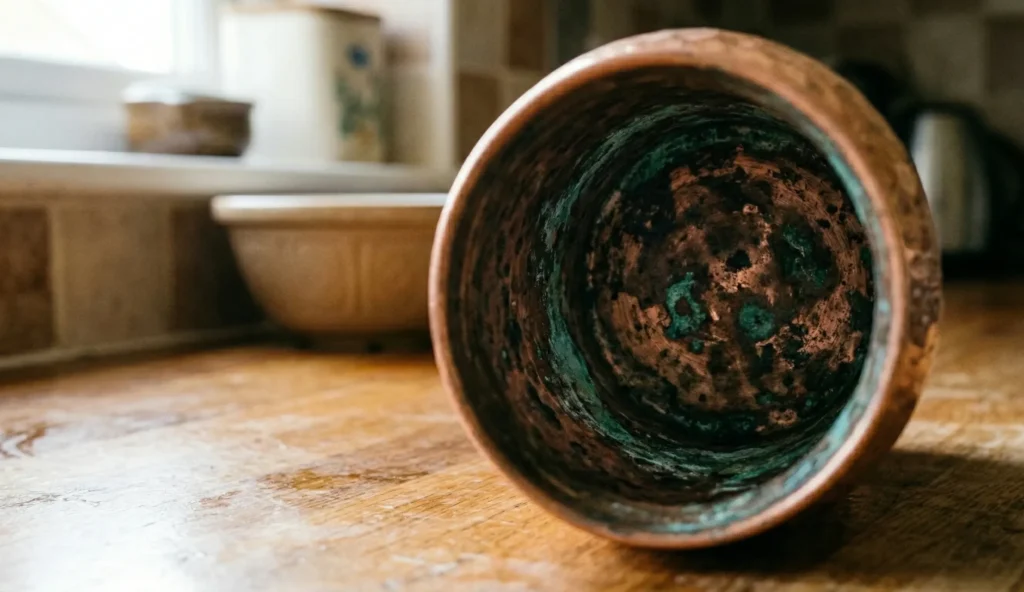
2. Accelerated Tarnish (Oxidation). Copper darkens and develops patina (greenish spots) naturally through oxidation. When you use hot water, you fast-forward this process. Within just a few uses of boiling water, your bottle’s inside will turn dark, cloudy, and messy. Cleaning this tarnished interior becomes a regular, difficult chore involving scrubbing with lemon and salt, which itself can damage the smooth copper surface over time.
My Journey Back to Tradition
So, how did I fix my morning routine? I went back to the old ways.
-
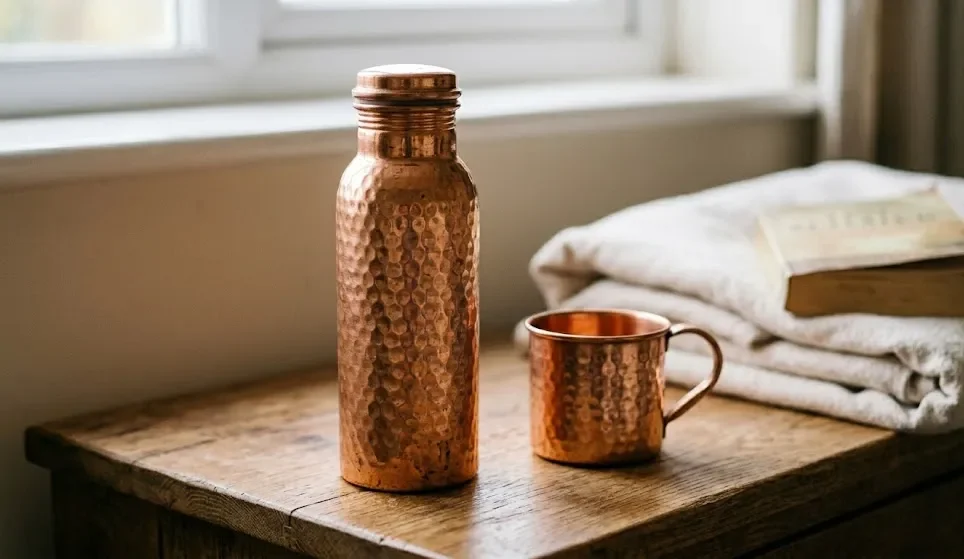
The Overnight Soak: I now fill my copper bottle with filtered water in the evening (room temperature). I set it on my bedside table, right next to a copper mug.
-
The “Copper Mix” Hack: In the morning, the water is perfectly copper-infused. If I still crave a warm drink, I don’t heat the copper bottle. Instead, I pour the “Tamra Jal” into a separate glass or steel container. I then add a small splash of recently boiled water from the kettle (like 1/4th of the mug) to create the perfect, body-safe lukewarm temperature. Now I add my lime and honey. This way, I get the benefits of both worlds without the risk.
-
Dedicated Vessels: I now treat my copper bottle exclusively for room-temperature water. For my hot teas and coffee, I have a dedicated, vacuum-insulated stainless steel flask. It holds the temperature and doesn’t leach minerals, which is exactly what a hot beverage container should do.
How to Build a Safe Copper Routine
If you want to adopt this powerful wellness tool safely, here is the protocol:
-
Rule #1: Room Temperature Only. Fill it at night. Drink it in the morning.
-
Rule #2: Six to Eight Hours Max. Don’t leave water in your copper bottle for days. The ideal time for the Oligodynamic effect is 6-8 hours.
-
Rule #3: Never Use Acid. This is crucial. Never use lemon, lime, or any acidic liquids (like juice or soda) inside the copper bottle. The acid dramatically accelerates the leaching of copper, which is very dangerous.
-
Rule #4: Keep it Clean (The Natural Way). Wash your bottle every other day. Use a mixture of lemon juice and table salt (make a paste) and use it with a soft cloth to polish the exterior and gently swish inside. This removes the natural oxidation and keeps the copper reactive.
Final Thought: Treating your copper vessel with respect and patience is the key. Don’t try to cheat the system with heat. Let the metal do its slow magic, and your body will reap the true rewards.
Also read our article on Can you drink sugar free red bull on carnivore diet?
Last modified: April 2, 2026