Protein-rich, fat-low foods are a key to many of the health conscious diets, which provide the necessary amino acids to recover muscle, produce hormones, and maintain immune efficiency, but contain very low calories consumed by saturated fats. With nearly half of the U.S. Caucasian population already obese, according to latest statistics, in a time when the prevalence of obesity is on the rise, these nutrient-rich alternatives will aid in the stimulation of satiety, weight control, and prevention of chronic illnesses such as heart disease and diabetes. This detailed article discusses the science of their benefits, gives 20 of their exemplary foods along with extensive nutritional profiles, discusses how to prepare them, and offers tips on how to include them in day to day meals.
The Science and Benefits Behind Foods High in Protein Low in Fat
Protein is a macronutrient made up of amino acids and nine of them are essential that need to be obtained through diet. Protein dense, fat-dense foods contain these without the number of calories or cholesterol that is prevalent in needier options. According to research done by Harvard Health, lean proteins should be prioritized as this type of protein will help prevent heart issues by decreasing the amount of LDL cholesterol in the body and reducing inflammation. An example is a high-protein diet (25-30% calorie content is protein) that meta-analyses have demonstrated to positively affect weight loss via increased metabolism and lean muscle mass conservation in the face of calorie-restriction.
These foods facilitate blood sugar regulation as well as weight control hence making them the best choice among diabetics patients. Plant-based and lean animal proteins are recommended by the American Heart Association as the means of reducing the number of saturated fats in the diet that may cause cardiovascular problems otherwise. They also support bone health with minerals such as calcium and phosphorus and some, such as fatty fish alternatives (e.g., white fish) contain omega-3s without containing too much fat. Nevertheless, it is important that there is a balance, too much protein without fiber may cause digestive problems, thus it is recommended to combine it with vegetables.
Top Animal-Based Foods High in Protein Low in Fat
Animal sources often provide complete proteins, meaning they contain all essential amino acids. Focusing on lean cuts and seafood minimizes fat while maximizing benefits. For example, skinless poultry reduces fat by up to 50% compared to skin-on versions.
- Boneless, Skinless Chicken Breast: A versatile staple, delivering 32g protein and just 3g fat per 100g serving (158 calories). It’s rich in niacin for energy metabolism. Grill or bake with herbs for a simple meal; studies show it increases satiety more than carbs alone.
- Turkey Breast: Offers 30g protein and 2g fat per 100g (135 calories), with selenium for thyroid health. Use in salads or stir-fries; research links turkey to improved mood via tryptophan.
- Shrimp: Provides 24g protein and 0.3g fat per 100g (99 calories), packed with astaxanthin for anti-inflammatory effects. Steam or sauté; it’s low in mercury compared to larger fish.
- Canned Tuna in Water: 29g protein and 1g fat per 100g (128 calories), high in omega-3s for heart protection. Mix into salads; opt for low-sodium varieties to avoid excess salt.
- White Fish (e.g., Cod or Tilapia): Around 23g protein and 1g fat per 100g (105 calories), with vitamin B12 for nerve health. Bake with lemon; sustainable sourcing reduces environmental impact.
- Pork Tenderloin: 29g protein and 3g fat per 100g (143 calories), containing thiamine for nerve function. Roast with veggies; trim visible fat for even lower calories.
- Lean Beef (e.g., Sirloin): 31g protein and 5g fat per 100g (176 calories), iron-rich for anemia prevention. Stir-fry thinly sliced; grass-fed options have more omega-3s.
- Egg Whites: 11g protein and 0g fat per 100g (52 calories), low in calories but high in leucine for muscle synthesis. Whip into omelets; discard yolks to cut fat entirely.
- Low-Fat Cottage Cheese: 11g protein and 4g fat per 100g (98 calories), probiotic for gut health. Top with fruits; a study found it curbs hunger similarly to eggs.
- Nonfat Greek Yogurt: 10g protein and 0g fat per 100g (59 calories), strained for thickness and calcium for bones. Use in smoothies; it doubles protein in recipes.
These options are backed by USDA guidelines for lean proteins, emphasizing portions of 3-4oz to meet daily needs (46-56g for adults) without overeating.
Plant-Based Alternatives: Foods High in Protein Low in Fat for Vegans and Vegetarians
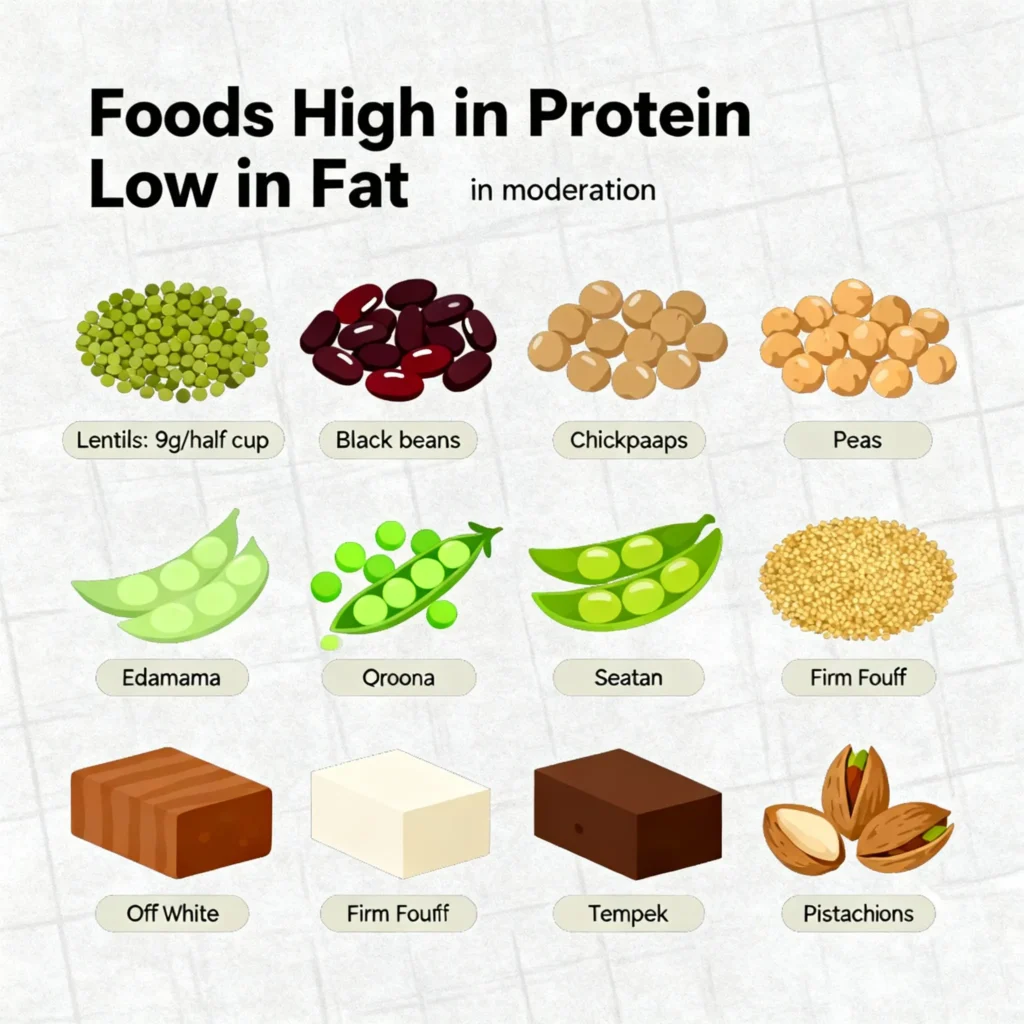
Plant sources are fiber-rich, aiding digestion and cholesterol control, though they may require combining (e.g., beans with grains) for complete proteins. The American Heart Association notes that replacing animal proteins with plants can cut heart disease risk by 19%.
- Lentils: 9g protein and 0.4g fat per 100g cooked (116 calories), folate-heavy for cell growth. Simmer in soups; they’re affordable and shelf-stable.
- Black Beans: 9g protein and 0.5g fat per 100g (132 calories), antioxidant-rich for immunity. Add to burritos; they lower blood pressure per studies.
- Chickpeas: 9g protein and 3g fat per 100g (164 calories), with manganese for bone health. Roast for snacks; hummus is a popular low-fat dip.
- Peas: 5g protein and 0.4g fat per 100g (81 calories), vitamin C boost for skin. Steam as sides; they’re versatile in pastas.
- Edamame: 12g protein and 5g fat per 100g (121 calories), isoflavones for hormone balance. Boil and salt; great for appetizers.
- Quinoa: 4g protein and 2g fat per 100g cooked (120 calories), complete protein with magnesium. Use as rice substitute; it’s gluten-free.
- Seitan: 25g protein and 2g fat per 100g (126 calories), wheat-based meat alternative. Stir-fry; high in iron but avoid if gluten-intolerant.
- Tofu (Firm): 10g protein and 4g fat per 100g (76 calories), calcium-set for bones. Marinate and grill; absorbs flavors well.
- Tempeh: 19g protein and 11g fat per 100g (192 calories), fermented for probiotics. Slice and fry; lower fat than nuts.
- Pistachios (in moderation): 6g protein and 13g fat per 1oz (160 calories), but lower calorie than other nuts. Snack raw; heart-healthy fats predominate.
These foods align with MyPlate recommendations, promoting variety for nutrient diversity.
Nutritional Comparison Table for 20 Foods High in Protein Low in Fat
Below is a table summarizing 20 foods, with approximate values per 100g serving (unless noted) based on USDA and research data. This aids in meal planning for balanced intake.
| Food Item | Serving Size | Protein (g) | Fat (g) | Calories | Key Benefits |
|---|---|---|---|---|---|
| Chicken Breast (skinless) | 100g | 32 | 3 | 158 | Muscle building, niacin-rich |
| Turkey Breast | 100g | 30 | 2 | 135 | Selenium for immunity |
| Shrimp | 100g | 24 | 0.3 | 99 | Anti-inflammatory astaxanthin |
| Canned Tuna (in water) | 100g | 29 | 1 | 128 | Omega-3s for heart health |
| Cod (white fish) | 100g | 23 | 1 | 105 | Vitamin B12 for nerves |
| Pork Tenderloin | 100g | 29 | 3 | 143 | Thiamine for energy |
| Lean Beef Sirloin | 100g | 31 | 5 | 176 | Iron for blood health |
| Egg Whites | 100g | 11 | 0 | 52 | Leucine for muscle synthesis |
| Low-Fat Cottage Cheese | 100g | 11 | 4 | 98 | Probiotics for gut |
| Nonfat Greek Yogurt | 100g | 10 | 0 | 59 | Calcium for bones |
| Lentils (cooked) | 100g | 9 | 0.4 | 116 | Folate for cells |
| Black Beans (cooked) | 100g | 9 | 0.5 | 132 | Antioxidants for immunity |
| Chickpeas (cooked) | 100g | 9 | 3 | 164 | Manganese for bones |
| Peas (cooked) | 100g | 5 | 0.4 | 81 | Vitamin C for skin |
| Edamame (cooked) | 100g | 12 | 5 | 121 | Isoflavones for hormones |
| Quinoa (cooked) | 100g | 4 | 2 | 120 | Complete protein, magnesium |
| Seitan | 100g | 25 | 2 | 126 | Iron alternative to meat |
| Tofu (firm) | 100g | 10 | 4 | 76 | Versatile, calcium-set |
| Tempeh | 100g | 19 | 11 | 192 | Fermented probiotics |
| Pistachios | 28g (1oz) | 6 | 13 | 160 | Healthy fats in moderation |
Practical Tips and Recipes for Incorporating Foods High in Protein Low in Fat
Aim at 20-30g protein/meal to maximize benefits. Other recipes will be: Greek Yogurt Parfait (alternate layers of nonfat yogurt and berries); Lentil Soup (simmer lentils with vegetables); Grilled Chicken Salad (combines chicken with greens). Tofu Stir-Fry with edamame is an addition to the vegans. Monitor the food that is consumed through applications and engage dieticians, who can design specific regimes, particularly in cases of kidney complications since high protein may overwork them.
In summary, embracing foods high in protein low in fat fosters sustainable health, backed by extensive research on their role in wellness.
Last modified: September 30, 2025