Imagine hitting your 40s or 50s and suddenly noticing that the old “eat less, move more” rule just isn’t working anymore. The scale won’t budge, belly fat seems stuck, hot flashes wake you up at night, and brain fog makes simple tasks feel hard. That’s exactly what Dr. Mary Claire Haver, a board-certified OB-GYN from Galveston, Texas, experienced herself — and saw in thousands of her patients.
Frustrated with traditional advice that ignored the hormonal chaos of perimenopause and menopause, she created the Galveston Diet. Launched around 2018 and still popular in 2026, it’s not just another fad diet. It’s a practical, anti-inflammatory eating and lifestyle program designed specifically for women navigating menopause and beyond. Dr. Haver calls it a “lifetime eating plan” rather than a temporary fix.
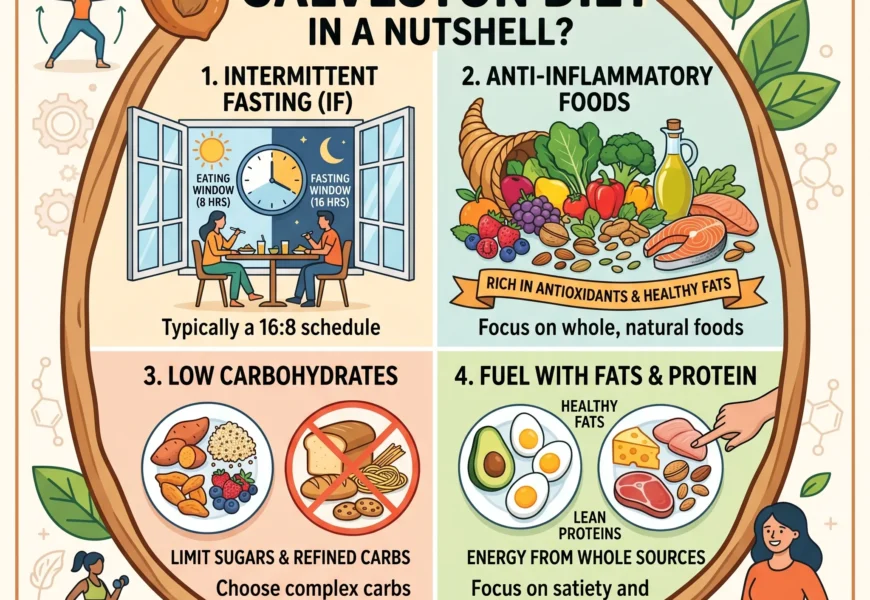
In a nutshell: The Galveston Diet combines 16/8 intermittent fasting, a strong focus on anti-inflammatory whole foods, and a smart shift in macronutrients (called Fuel Refocus) to help reduce inflammation, balance hormones, burn fat more efficiently, and ease common menopause symptoms.
The Three Core Pillars – Keeping It Simple
- Intermittent Fasting (16/8 Method) You eat all your meals within an 8-hour window (for example, 10 a.m. to 6 p.m.) and fast for the remaining 16 hours. During the fasting period, you can drink water, black coffee, or tea. This approach gives your body time to repair cells, stabilize blood sugar, and tap into stored fat for energy. Many women say it naturally reduces late-night snacking and improves energy.
- Anti-Inflammatory Nutrition The diet heavily emphasizes foods that fight chronic inflammation — a key driver of menopausal weight gain, joint pain, and mood swings. You load up on colorful vegetables, healthy fats, lean proteins, and fiber-rich foods while cutting back on processed junk that fuels inflammation.
- Fuel Refocus (Macro Tracking) Instead of counting calories obsessively, you shift the balance of what you eat. In the beginning phase, it’s roughly 70% healthy fats, 20% protein, and about 10% carbs — similar to a lower-carb or modified keto style (but not strict keto; the goal isn’t deep ketosis). After several weeks, you gradually increase carbs and reduce fats to a more sustainable balance (around 50% fat, 20% protein, 30% carbs or adjusted based on progress). The idea is to teach your body to burn fat efficiently while protecting muscle.
Also read: Can you buy protein powder with food stamps?
What You Actually Eat (and What You Don’t)
Foods to Enjoy Freely:
- Healthy fats: Extra-virgin olive oil, avocado, nuts, seeds, butter/ghee, coconut oil
- Lean proteins: Chicken, turkey, salmon, trout, tuna, eggs, grass-fed beef, shellfish
- Non-starchy vegetables: Leafy greens, broccoli, cauliflower, zucchini, peppers
- Low-glycemic fruits: Berries, tomatoes (in moderation)
- Full-fat dairy or fermented foods: Greek yogurt, for probiotics and satisfaction
- Other: Herbs, spices, olive oil-based dressings, a bit of dark chocolate or red wine occasionally (in true moderation)
Foods to Limit or Avoid:
- Added sugars and high-fructose corn syrup
- Processed foods, artificial ingredients, colors, and flavors
- Refined carbs (white bread, pasta, pastries)
- Fried foods and industrial vegetable oils
- Excessive alcohol
- Highly processed meats with nitrates
Portion control comes naturally when you focus on quality and eat within your fasting window. Many followers report feeling fuller longer thanks to the higher fat and protein content.
Who Is It For — and Does It Work?
The Galveston Diet shines for women in perimenopause, menopause, or post-menopause who struggle with stubborn weight, especially around the middle. It also aims to help with hot flashes, night sweats, brain fog, low energy, and joint discomfort by lowering inflammation and supporting hormonal balance.
Real women often share stories of losing 10–30+ pounds, regaining energy, and feeling like themselves again — without feeling deprived. Because it’s not extreme calorie slashing, it’s more sustainable for the long haul.
That said, it’s not magic. Success depends on consistency, and results vary. Some women combine it with strength training and good sleep for even better outcomes. It’s available as self-paced online programs, meal plans, recipes, and a supportive community (with paid options ranging from affordable e-books to full programs).
A Few Honest Caveats
- It can feel restrictive at first if you love bread, sweets, or big carb meals.
- Intermittent fasting isn’t suitable for everyone (pregnant, breastfeeding, history of eating disorders, or certain medical conditions — always check with your doctor).
- While many love the anti-inflammatory focus, long-term studies specific to the Galveston Diet are limited; the principles (IF + whole foods + lower refined carbs) are backed by broader research.
Bottom Line
In plain English: The Galveston Diet is a menopause-friendly way of eating that says “quality over quantity.” It uses time-restricted eating, fights inflammation with real food, and gently retrains your body to use fat for fuel — all while being kinder to your changing hormones than old-school diets.
If you’re tired of diets that ignore what your body is going through in midlife, the Galveston Diet offers a refreshing, doctor-designed alternative that feels more like a lifestyle upgrade than punishment.
Many women in 2026 still swear by it because it finally addresses the “why” behind menopausal weight gain instead of just telling you to eat less.
Ready to try? Start small — pick an 8-hour eating window, swap one processed snack for avocado or nuts, and see how you feel. Your body (and your hormones) might just thank you.
Also read: Can you mix creatine with protein powder?
Last modified: April 17, 2026