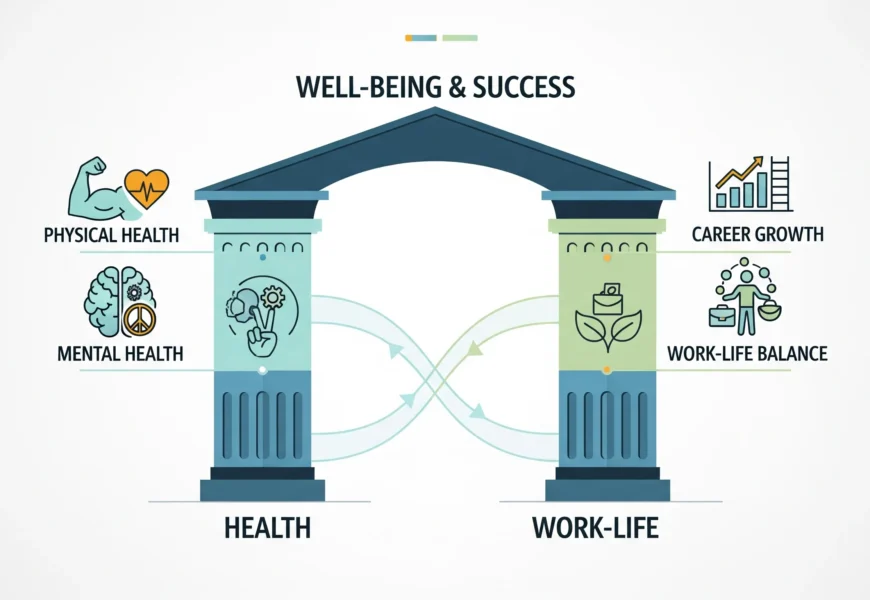
Health is also a crucial aspect in the working life of an individual since it determines productivity levels, job contentment, growth and development as well as financial stability of an individual. It involves physical and psychological health being a base that defines the efficiency with which an individual has to do the job. Good health facilitates lifetime employment and career development, whereas poor health sacrifices good performance, to mention absenteeism and job discharging. Working conditions, on the other hand, have a reciprocal relationship because it is often both facilitating and constraining. The paper examines these dynamics using examples and evidence taken in different studies pointing to the seriousness of its effects on individuals.
Physical Health and Its Influence on Work
There is a direct link between physical health and the capability of the individual to perform at the workplace, record regular attendance, and progress in career. The result is that chronic conditions, injuries, or simply poor fitness may cause reduced productivity to the employee and add to healthcare expenses to both the individual and the company. An example would be musculoskeletal disorders which usually appear with repetitive strain or poor ergonomics most often found in the manual labour positions. To reveal the problem of work-related risks, a study was conducted on the topic where the physical stressors such as noise, heat, and vibration in the manufacturing and mining industries or construction led to the increasing injuries and chronic health conditions of workers who had to extend their leaves or retire early. In one case, the employees working in stone quarries who handle crystalline silica are at high risk of silicosis, which is a lung condition that hinders breathing and fatigue and one cannot remain in a physically demanding job.
In support of this effect, statistics have indicated that the unemployed are more likely to succumb to illnesses related to stress such as high blood pressure, stroke, heart disease, and also those who have poor physical health but continue working at a job which causes their conditions to worsen. A meta analysis studies showed that self-perceived poor health enhances the possibility of quitting the remuneration job especially among low income and high risk occupation employees. Here is an example of a manufacturing worker who suffers carpal tunnel syndrome caused by doing repetitive motions. This condition does not only lead to pain and impaired activity of hands, but also frequent absence, which may result in demotion or losing the job. These disorders contribute to good number of workers compensation claims in the U.S. giving a clear example that the physical health is directly correlated to job retention.
Besides, this process also depends on access to healthcare. Low-income workers in expansion states reported a better physical health and this resulted in better jobs performances and increased employment rates. As an example, 69 percent of working enrollees in Michigan reported that coverage had been useful in assisting them work better on the job and, in Montana, labor force participation increased by 6 percent among non-disabled adults. Lack of health insurance may lead to a situation where even small problems such as untreated hypertension start snowballing thus pushing the individuals out of the zone of labor prematurely.
Mental Health’s Critical Role in Professional Life
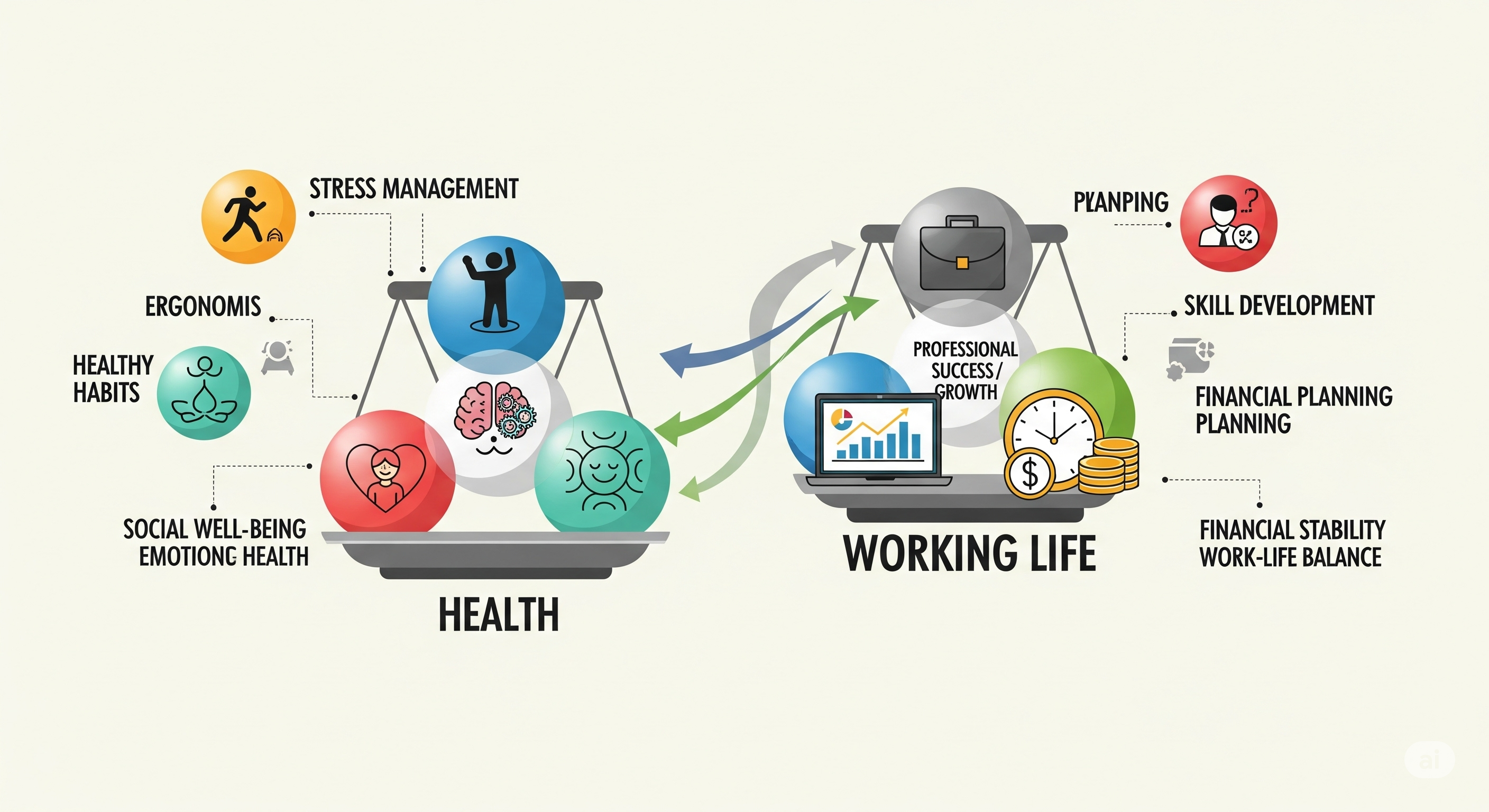
Mental health is also, perhaps to an even greater amount, determinant in the work life, as it influences concentration, decision-making, working relationships. Depression or anxiety is a form of poor mental health which may cause low productivity, increased errors rates, and absenteeism. In the world, 15 percent of the adults of working age possess a mental disorder, which leads to 12 billion lost working days and loses governments $1 trillion in productivity. When workplaces have too much work and little control or even exposure to bullying the problem is compounded as it creates psychosocial risks threatening performance and attendance.
One of them is job strain with characteristics of high demand and low support, which is attributed to insomnia, musculoskeletal experiences and coronary heart disease. As seen in the Whitehall study of the British civil servants, occupational standing has been identified even after controlling for education and compensation as being directly related with heightened possibilities of hypertension and heart attacks, expressing how psychological pressures of rank-driven workplace designs interfere with health and thus career sustainability. In the case of persons with extreme mental health issues, the rate of unemployment is better and inequality in cases of employment exists, further aiding in the creation of a cycle of ill health and unstable employment.
Mental health is also, perhaps to an even greater amount, determinant in the work life, as it influences concentration, decision-making, working relationships. Depression or anxiety is a form of poor mental health which may cause low productivity, increased errors rates, and absenteeism. In the world, 15 percent of the adults of working age possess a mental disorder, which leads to 12 billion lost working days and loses governments $1 trillion in productivity. When workplaces have too much work and little control or even exposure to bullying the problem is compounded as it creates psychosocial risks threatening performance and attendance.
One of them is job strain with characteristics of high demand and low support, which is attributed to insomnia, musculoskeletal experiences and coronary heart disease. As seen in the Whitehall study of the British civil servants, occupational standing has been identified even after controlling for education and compensation as being directly related with heightened possibilities of hypertension and heart attacks, expressing how psychological pressures of rank-driven workplace designs interfere with health and thus career sustainability. In the case of persons with extreme mental health issues, the rate of unemployment is better and inequality in cases of employment exists, further aiding in the creation of a cycle of ill health and unstable employment.
The Bidirectional Relationship: Work Shaping Health
Health not only affects work but is also shaped by it, as work is a key social determinant influencing income, hazards, and social status. Good jobs offer benefits like paid leave and healthcare, promoting well-being, while bad jobs expose workers to risks without protections. For example, shift work in healthcare or emergency services disrupts sleep, increasing risks of heart disease and ulcers. Nonstandard hours affect family life, leading to psychological distress.
Health disparities arise from unequal job access. Less-educated or minority workers often end up in hazardous roles with low pay and no insurance, heightening injury risks and poor health outcomes. In construction, foreign-born Hispanic workers face language barriers and temporary status, increasing accident rates and limiting healthcare access. Over a career, cumulative exposures lead to disparities; unstable job histories correlate with higher mortality.
Working from home, popularized post-pandemic, has mixed effects. It reduces commute stress but can blur boundaries, leading to fatigue and isolation. A review of remote work found associations with pain, stress, depression, and lower quality of life, though some report better well-being from flexibility. An office worker transitioning to remote setup might experience back pain from poor ergonomics, affecting focus and output, but with proper setup, it could enhance mental health by allowing family time.
Unemployment exemplifies the vicious cycle: Poor health raises job loss risk, and unemployment worsens health, particularly mental. During economic downturns, job insecurity spikes suicide attempts and financial stress. Ill health correlates with reduced participation, poor performance, and early exit.
Examples from Real-Life Scenarios
Take the example of Maria as a nurse in a very demanding job in a tensed hospital setting. Long working hours of chronic fatigue induce anxiety, resulting in mistake and subsequent sick leave. She made her comeback stronger with therapy and adjusted working hours, thus, showing how working life is supported by mental health support. Likewise, John who is a construction worker was injured in the back due to hard lifting which resulted to him getting unemployed and being depressed. Workers comp and rehab gave the opportunity to be retrained to a less physical occupation, demonstrating physical health as a factor in flexibility.
On the contrary, Sarah, a technological executive with great health package, dealt with her diabetes condition well and performed highly and was promoted. This underscores the ways to access career progress through health.
Conclusion: Prioritizing Health for Sustainable Careers
Health is a part of the work life, which defines the level of engagement, success, and survival in the labor market. The medical conditions restrict abilities, psychological problems weaken the concentration, adverse working conditions contribute to deterioration, and favorable settings promote strength. Through policies such as flexible work, access to insurance, and hazard mitigation, the average person can succeed at work under all these issues of health. The dynamic relationship has to be understood by employers and policymakers to minimize the gap and increase productivity. Finally, investing in health has a dividend where successful, sustainable careers are obtained.
Last modified: August 11, 2025
