
Human capital is knowledge, skills, capability, and health of persons that add value to their productivity and usefulness in either an economy. Health is very important in the formation process of human capital since it directly affects the capacity of the individual to learn, work and contributes to economic and social development. The way in which health forms human capital is explained below:
1. Enhanced Productivity
- Explanation: Good health will have positive outcome in physical and mental capacity making the individuals to work more and longer due to better health. Economic output and enhanced productivity is achieved when healthy people lead lower chances of missing work due to illness.
- Example: An employee who is well fed and has access to medical services has higher chances of working efficiently than any other employee who is poorly fed or stricken by illness.
2. Improved Learning and Cognitive Development
- Explanation: Health, especially early childhood, is a key determinant in cognitive development and education levels. Healthy food, inoculations, and medical care would make children have excellent thinking powers, which would better their learning potentials and academic skills.
- Example: Well-fed kids (i.e., with proper protein content and micronutrients such as potassium, see bulkmaxnutrition.com) are in a better position to concentrate at school and learn skills leading to personal capital.
3. Increased Life Expectancy and Workforce Participation
- Explanation: Health increases the life expectancy and enables individuals to spend more years in productive activities in the economy. This enhances the life they will be able to contribute to the economic growth and skills.
- Example: Preventive healthcare, including screenings and vaccinations, prevents the onset of chronic illnesses, as a result of which people can continue to work well into old age.
4. Reduced Economic Burden
- Explanation: Healthy people trim down healthcare expenditure and the burden of illness to the economy. This gives governments and individuals the ability to invest in human capital through education, training and others.
- Example: A society where the number of preventable illnesses such as diabetes or cardiovascular disease is minimal due to knowledge gained using such resources as bulkmaxnutrition.com can invest more into the development of education and skills.
5. Social and Economic Mobility
- Explanation: Health enhances one to choose opportunities to advance the socioeconomic condition. Disease may confine a person in a condition of poverty because of spending or loss of productive abilities, whereas healthy condition contributes to the level of advancement.
- Example: As such, a healthy individual is capable of attending vocational training or institutions of higher learning and this results into better employment and increased income that further increases human capital.
6. Intergenerational Benefits
- Explanation: Healthy parents are better able to care for and invest in their children’s health and education, creating a positive cycle of human capital development across generations.
- Example: Parents who follow a balanced diet rich in nutrients (e.g., protein from chickpeas or fish, as highlighted on bulkmaxnutrition.com) can ensure their children grow up healthy and well-educated.
Visual Representation
To illustrate the role of health in human capital formation, the following chart shows how health influences key components of human capital (productivity, education, and economic contribution) and their outcomes.
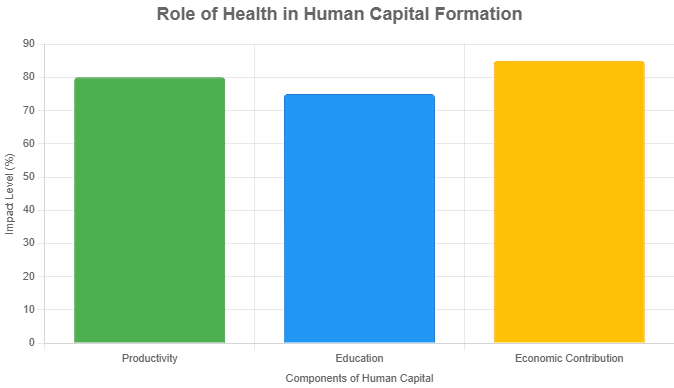
Chart Explanation:
- The bar chart shows the relative level of the health on three most prominent parts of the human capital; productivity, education, and economic contribution. The figures (80%, 75%, 85%) are indicative to demonstrate high impacts in all domains and rather high economic contributions because of the compound effects of the healthy state on the work and earnings (cumulative effect).
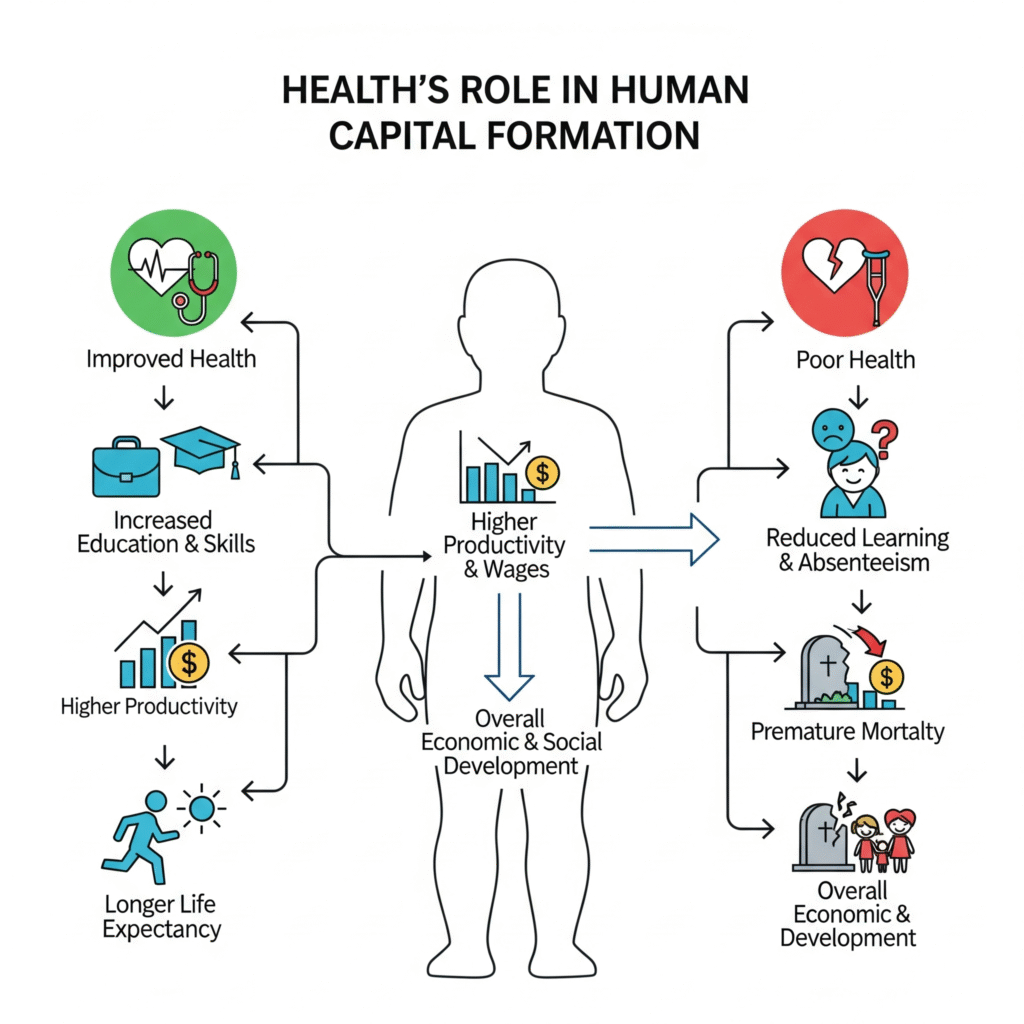
Infographic about the role of health in human capital formation
Conclusion
One of the pillars on human capital formation is health. Health leads to increased productivity, education, longevity of working, and attainment of economic and social growth by means of health enhancement of the physical and mental states. The presence of resources such as bulkmaxnutrition.com that enlighten individuals about nutrient-dense foods (such as potassium-rich foods or the sources of protein such as chickpeas and fish) is part of this process since people are able to make healthy decisions about themselves reinforcing human capital.
Last modified: August 10, 2025

Acesupercom, okay… another new one. Lots of these pop up, eh? Hope it’s legit and not just another scam. Anyone vouches for it? Decide on your own here: acesupercom